

What does someone need in order to feel comfortable walking into your venue for the first time?
Not confidence.
Not expertise.
Not a working knowledge of etiquette or cultural codes.
They need to feel welcome.
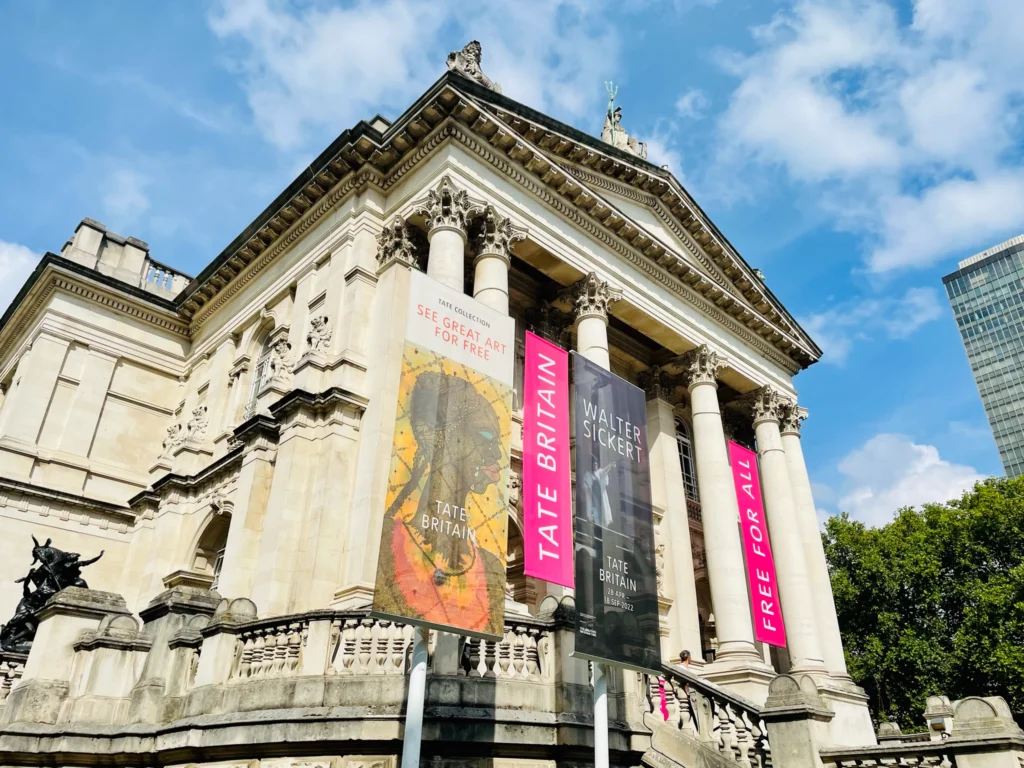
I found myself thinking about this recently while visiting Tate Britain to see the Walter Sickert exhibition before it closed.
When booking my ticket, I noticed a thoughtful article on Tate’s website designed to help visitors feel more confident about looking at art. One line in particular stopped me in my tracks:
“Try to think of the gallery as a menu, rather than a to-do list.”
I wish I’d been told that years ago.
Knowing the rules isn’t the same as feeling you belong
For a long time, my approach to museums was conscientious rather than curious. I wanted to see everything. I followed the implied rules. I left with a sense of achievement, but sometimes very little emotional connection.
That single sentence from Tate didn’t explain the rules.
It gave permission to ignore them.
It removed pressure. It invited choice. It reframed the experience as something personal rather than performative.
The collection hadn’t changed, but my relationship with it had.
Welcome is a form of accessibility
Cultural spaces are full of unspoken rules:
how long you’re supposed to stay,
what you’re meant to understand,
how you should behave,
what questions are acceptable.
For regular visitors, these rules are invisible. For first-timers, or for people who don’t see themselves reflected in cultural spaces, they can be quietly intimidating.
That’s why accessibility isn’t only about ramps, pricing, or opening hours.
It’s also psychological.
Feeling welcome is what allows people to relax enough to engage.
When guidance creates belonging
I was reminded of this again at the BBC Proms, where the programme includes a short note that feels like a masterclass in inclusive audience guidance.
Alongside practical reminders, it acknowledges that people may respond to the music in different ways, and gently asks audience members to be considerate of one another.
In just a few lines, it does something quietly powerful: it sets expectations without policing behavior, and encourages empathy without singling anyone out.
The message is clear and generous:
however you respond, you belong here.
In live performance spaces, where fear of “doing the wrong thing” can be a real barrier, that kind of reassurance matters enormously.
Welcome doesn’t stop at the door
I was reminded of this again in an unexpected place: a UK-themed souvenir boutique at Heathrow Airport — the sort that sells London sweatshirts and fancy stationery — which happened to stock Victoria and Albert Museum merchandise among many other items.
While browsing before an early flight, the sales assistant asked whether I’d ever been to the V&A. When I said yes, her face lit up. She told me she’d visited for the first time the previous week and was still buzzing from the experience.
I asked what had stood out for her.
She immediately reached for her phone and showed me a photo of herself standing in front of the Shiva Nataraja in the South Asian Sculpture Gallery. She explained that she’s from South Asia, and that being immersed in objects from her own culture, in such a grand, public space, had overwhelmed her with emotion. Even days later, it was still just beneath the surface.
What struck me wasn’t just her enthusiasm. It was how confidently she shared the experience and how seen she felt.
That confidence didn’t come from knowing the rules.
It came from recognition, welcome, and permission to connect.
The signals that tell people they belong
What Tate Britain does with a sentence, what the Proms do with a paragraph, and what the V&A achieves through representation are all expressions of the same principle.
They don’t simplify the work.
They don’t lower standards.
They don’t remove complexity.
They remove fear.
They signal:
You don’t have to get this “right”
You’re allowed to be curious.
There’s more than one way to be here.
That welcome can show up in many small ways:
pre-visit content that reassures rather than instructs,
programmes and signage that invite different responses,
front-of-house interactions that normalize questions,
interpretation that reflects a range of lived experiences.
A question worth asking
If someone were visiting your venue for the very first time:
What might they worry about getting wrong?
What assumptions are you making about what they already know?
Where could a small signal make a big difference?
Because opening the door is only the beginning.
Feeling welcome, truly welcome, is what allows people to step inside, relax, and decide they want to come back.