
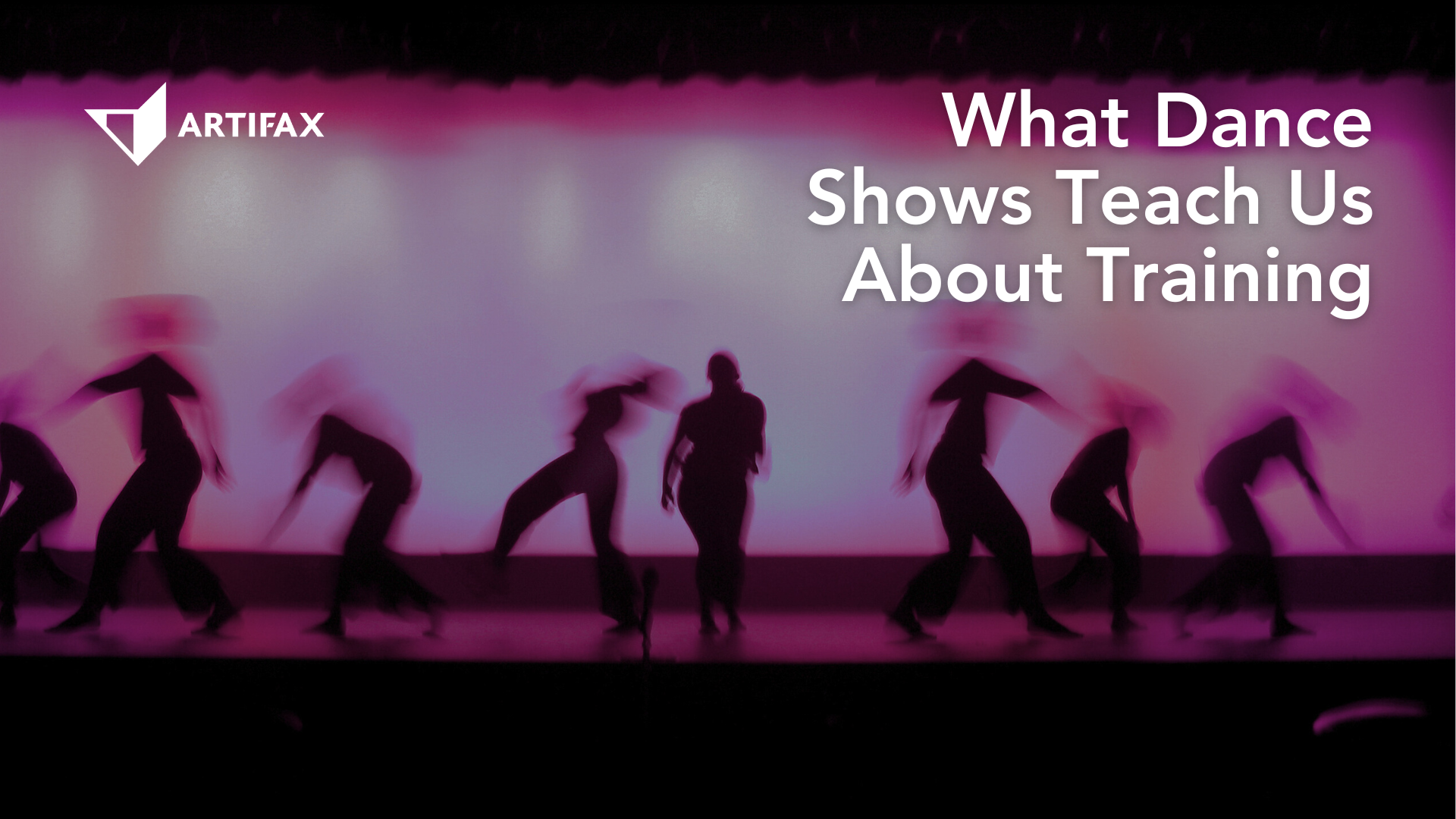
When I was a fresher at university in the late 1990s, line dancing was sweeping the country.
I spotted an opportunity and trained as a country and western dance instructor, teaching classes a couple of nights a week. The rooms were always mixed. People of different ages, confidence levels, fitness and experience were all learning together.
What I learned very quickly was this: if you want a group to improve, you have to make the complex feel simple. You have to teach in layers. And you have to help people progress together, even when they are starting from very different places.
Years later, those lessons helped me land my first role as a trainer at Artifax. They still shape how I think about training today.
Confidence comes before complexity
Whether it is a line-dancing class or a ballroom routine on Strictly Come Dancing or Dancing With The Stars, no one starts with the full performance. What those shows make visible, week after week, is how expert coaching, structure and practice turn uncertainty into confidence.
Early sessions focus on simple, achievable steps: timing, rhythm and basic movement. The goal is not perfection. It is confidence.
Effective training works the same way. When learning is broken into clear, manageable stages, people can start using what they have learned straight away. They do not feel overwhelmed or stuck in theory. Instead, progress feels natural and confidence builds quickly.
Knowing how something works isn’t the same as using it well
You can learn dance steps from a video. You can read instructions. You can understand the mechanics without ever feeling comfortable on the floor.
Software is no different.
Videos and documentation are excellent at explaining how an application works. They show where things are and what they do. That kind of self-led learning is useful and often enough to get started.
But on its own, it only goes so far.
Training that relies solely on generic resources assumes people can easily translate instructions into daily practice, regardless of role, pressure or existing processes. In reality, that translation is where most uncertainty appears.
Training adds value by focusing on daily practice
Effective training does not repeat what is already in the help center. Instead, it focuses on how an application fits into real working lives.
It looks at everyday scenarios, common decisions and typical challenges. It helps teams understand how to use tools together, not just individually.
In other words, training is not about learning features. It is about learning patterns.
That is the difference between knowing where a button is and knowing when, and why, to use it.
Understanding the “why” removes friction
On a dance show, contestants do not just copy movements. They learn why a step works, why timing matters and how small adjustments make everything smoother. Once that understanding clicks, confidence follows.
The same is true in workplace training.
When people understand why a workflow exists, they rely less on memorisation and more on judgement. They adapt more easily when circumstances change. They are also far less likely to feel unsure or stuck.
Learning the why does not make things harder. It makes them easier to use well.
The real stretch is improving habits, not learning software
Learning to dance is rarely about doing something impossibly hard. The stretch comes from refining habits: standing differently, letting go of shortcuts and noticing things that were previously automatic.
Training often creates the same opportunity.
As teams learn how to use a system well, they may spot ways to simplify processes, clarify responsibilities or replace workarounds that have built up over time. That is not a sign the software is hard to learn. It is a sign that guided learning creates space to improve how work gets done.
Training a few well equips the many
In any class, progress accelerates when a few people really understand the foundations. They become confident points of reference. Others learn from them. The group moves forward together.
The same thing happens in organizations.
When power users are trained deeply, they are equipped to support colleagues, share best practice and answer real-world questions. The many benefit from investment in the few, and knowledge stays within the organization rather than walking out the door.
Training works best when it adapts to real people
Dance coaching works because it responds to the individual. Everyone learns at a slightly different pace. Everyone brings different experience.
Effective training respects that reality.
Different roles need different outcomes. Different organizations have different pressures. Training that reflects real contexts feels relevant and supportive, rather than generic or imposed.
People don’t feel pushed. They feel guided.
Enjoyment matters
Learning sticks when people enjoy the process.
On dance shows, enjoyment builds confidence and keeps people open to feedback. Training is no different. When sessions are practical, human, and enjoyable, people engage more fully and leave feeling capable — not drained.
Enjoyment isn’t about entertainment. It’s about creating the conditions where learning actually works.
What this means for training at Artifax
On dance shows, the performances we remember are rarely about flawless steps. They are about confidence. The sense that someone understands what they are doing, why they are doing it and how to recover when something does not go to plan.
That confidence is built long before the lights come up. It comes from guided rehearsal, shared understanding and the chance to practise in a supportive environment.
Training at Artifax works the same way. Learning how the application works is intentionally straightforward, supported by clear documentation and videos. Training focuses on what comes next: embedding Artifax into daily practice, understanding the why behind workflows and building confidence that carries into real situations.
When a few people are trained well, that confidence spreads. Knowledge is shared. Processes improve. Teams move forward together.
Like any strong performance, what looks effortless in the end is the result of thoughtful preparation, where guidance, practice and enjoyment turn learning into lasting confidence.