At the turn of the year, it’s common to talk about improvement: doing more, moving faster, making better use of limited resources.
But some of the most interesting reflections we’ve seen recently point in a different direction. They’re not about output or efficiency. They’re about presence.
- Being somewhere at the same time as other people.
- Experiencing something live rather than on demand.
- In other words, sharing time, not just outcomes.
The spark for this reflection came from reading a collection of cultural New Year resolutions by writers and critics working across arts and culture. What was striking wasn’t the specific ambitions — books to read, films to watch, habits to change — but the pattern that emerged across many different voices.
Again and again, the focus wasn’t on doing more. It was on how things are experienced: choosing live over on-demand, sharing time with others, revisiting familiar work with fresh perspective, and creating space for attention, rhythm, and presence.
In arts and culture, this way of thinking is second nature. Performances, exhibitions, conferences, and events only exist because people show up together. The value isn’t just in what happens on stage or in a space — it’s in the fact that it happens now, with others, under specific conditions.
What’s less obvious is how transferable this thinking is to the work that happens behind the scenes.
Coordination is not overhead.
That way of thinking doesn’t stop at the audience experience. It’s built into how arts organizations operate every day.
Arts organizations are experts in shared time.
Rehearsals, load-ins, performances, changeovers, and get-outs all rely on careful coordination. In practice, people, spaces, equipment, and time have to align precisely for anything to work at all.
No one in this world mistakes coordination for bureaucracy. It’s understood as essential, skilled work. It’s what allows presence to be possible in the first place.
That same principle applies far beyond the arts.
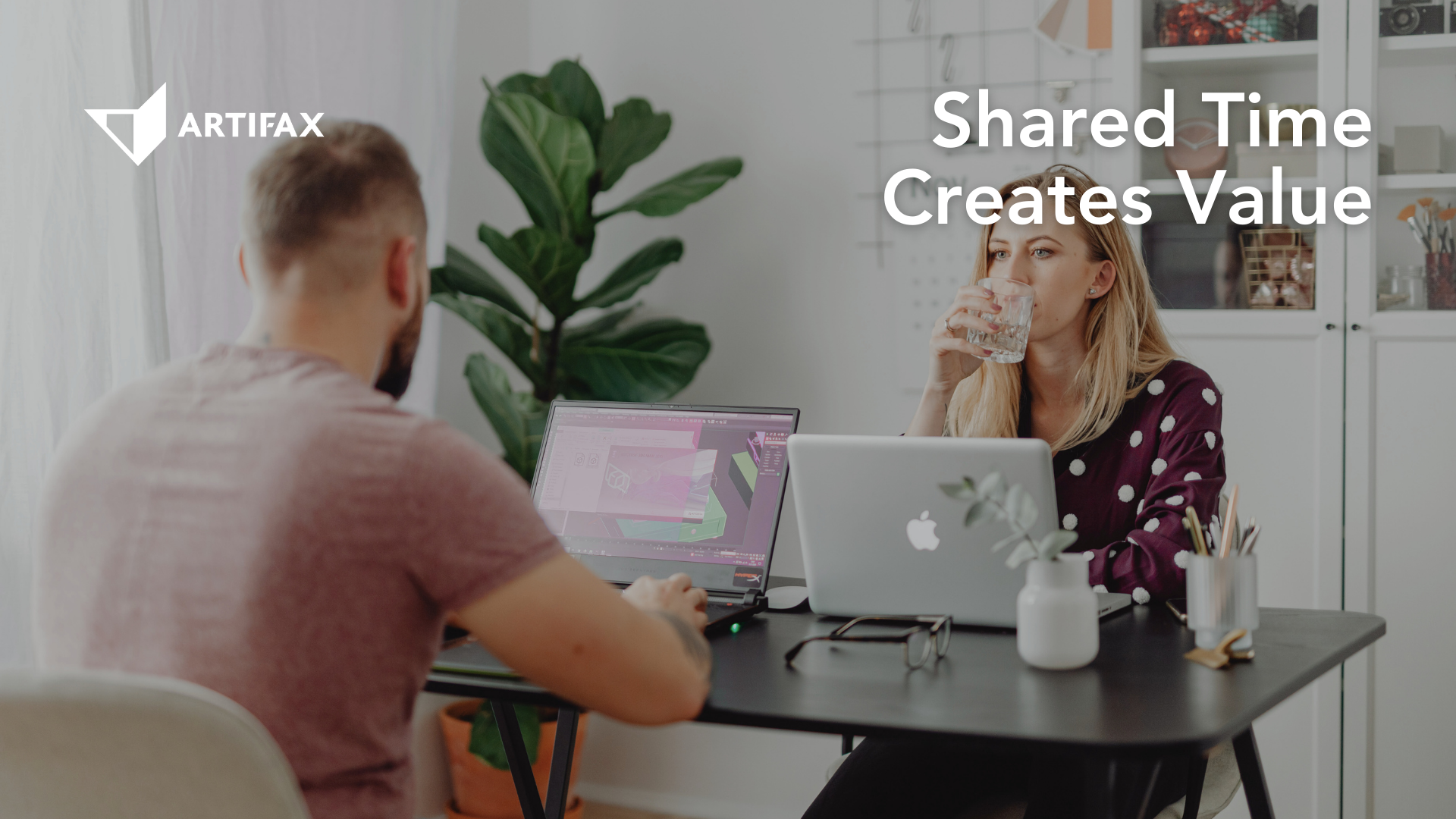
In any organization where people need to collaborate, decide, deliver, or reflect together, shared time creates value. It builds understanding. It gives decisions weight. It creates momentum and memory.
Seen this way, coordination isn’t overhead, and presence isn’t inefficiency.
Presence adds value rather than subtracting it.
There’s a temptation in modern working life to treat presence as something to minimize: fewer meetings, fewer dependencies, more flexibility, more autonomy. However, that instinct misses what presence actually makes possible.
Flexibility matters. But so does rhythm.
Work that lands well often has pacing: preparation, anticipation, delivery, and reflection. It creates moments where being there together adds something you can’t get any other way.
Arts audiences understand this intuitively. Live events feel different from recordings. Weekly episodes feel different from bingeing. Opening nights feel different from matinees.
Behind the scenes, the same dynamics apply. Not everything benefits from being compressed or made frictionless. Some work needs time, focus, and shared attention to be experienced well.
Revisiting beats constant replacement
One thing arts organizations understand deeply is that work is never finished in a single form.
Stories, ideas, and works are continually reinterpreted as contexts change. At the same time, new audiences bring new meaning to familiar work. A book becomes a play, then an opera, then a movie, then a stage musical. It becomes a television series, then a film musical. It’s revived, restaged, retranslated, and reimagined — not because the original was lacking, but because meaning evolves.
Each reinterpretation brings new understanding, new connections, and new relevance.
That mindset offers an important counterpoint to the constant pressure, in many organizations, to replace rather than revisit.
Value doesn’t always come from starting again. Often it comes from reappraising what already exists: reconsidering assumptions, adapting to changing needs, and being willing to challenge how things are currently done.
This is as true for processes and systems as it is for creative work. Tools, configurations, and ways of working benefit from periodic reinterpretation — shaped by experience, informed by context, and aligned with where an organization is going next.
At Artifax, we encourage and support this kind of ongoing reappraisal. Not because change is an end in itself, but because organizations evolve. Their audiences change. Their pressures shift. And the tools that support them need to remain honed to current and future needs, not frozen at a moment in time.
Depth is cumulative, and thoughtful revisiting is often where lasting value is found.
Designing the conditions for shared moments.
At their best, arts organizations are expert designers of experience — not just for audiences, but for the people doing the work.
They think carefully about sequencing, pacing, transitions, moments of focus, and moments of handover.
That mindset is just as relevant wherever work depends on people coming together.
When work is designed only around tasks, it can feel fragmented. In contrast, when it’s designed around moments, it gains coherence and meaning.
What this means for us.
Importantly, these ideas are not abstract for us. At Artifax, we work with organizations whose success depends on shared time: performances, rehearsals, events, education, conferences, and everything that supports them.
Behind every public moment is a quieter layer of work — planning, scheduling, resourcing, and coordination — that determines whether presence is possible at all.
Working in this world has shaped how we think about work more broadly.
The best culture and the best work don’t just happen. They emerge when the right conditions are in place — something we can all actively shape.
Creating the right conditions also takes support. That’s why our teams work together to help organizations move from vision to reality:
-
Our Client Success team works closely with clients to understand their goals and long-term vision, helping shape strategies that reflect how they want their organization to work now and in the future.
-
Our Professional Services team provides consultancy and training to support execution — helping teams adapt processes, configurations, and ways of working so their tools are aligned with real-world needs.
-
Our Support team offers expert, practical guidance day to day — answering questions, sharing best practice, and helping teams get the most out of the system as their needs evolve.
Together, this support helps ensure that planning, coordination, and shared time remain assets — not constraints — as organizations grow and change.