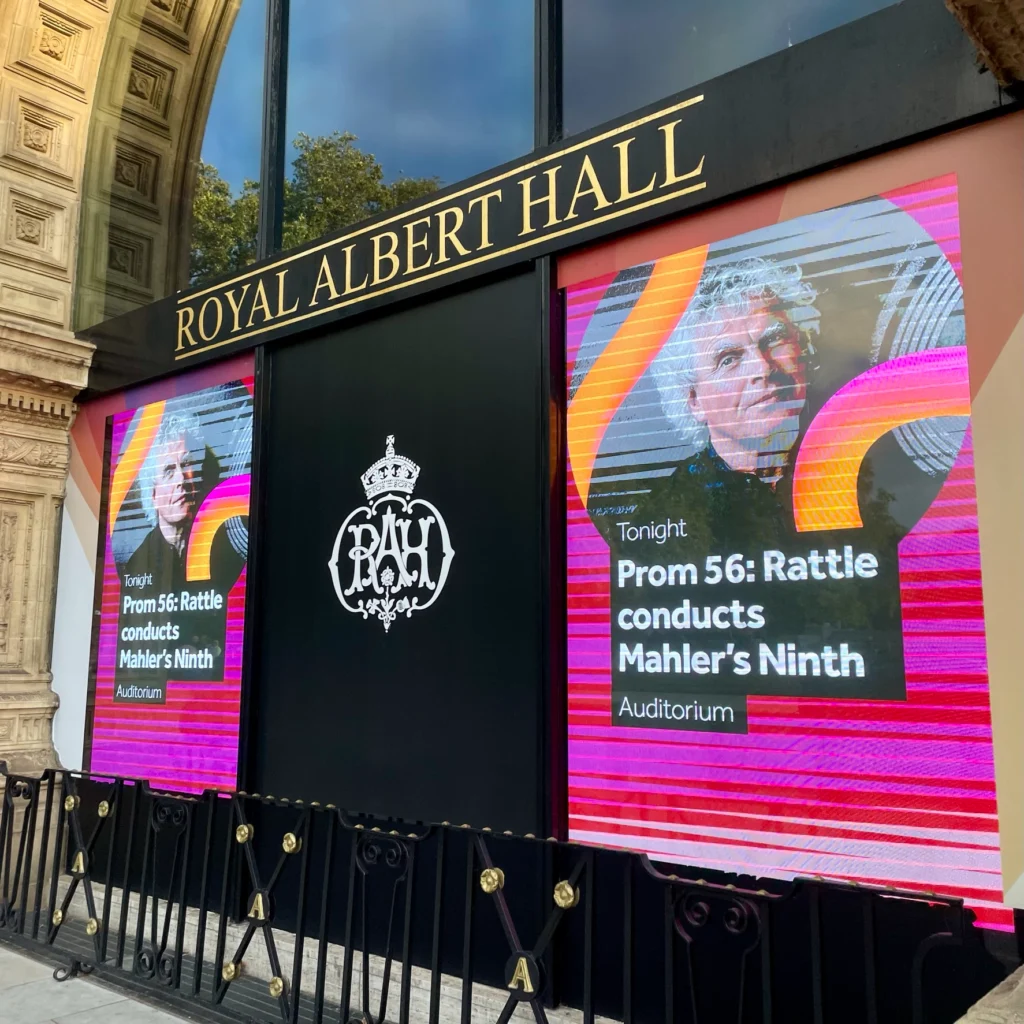
During a recent performance of Mahler’s Ninth Symphony — a composer often used as shorthand for “serious” or “highbrow” music — I found myself thinking about how easily cultural references can unintentionally exclude people.
Not just audiences.
Colleagues, freelancers, new starters, partners, board members — all of us move through cultural organizations with very different frames of reference. And yet, internally and externally, we often behave as if those frames are shared.
Two famous examples came to mind.
In Educating Rita, Maureen Lipman throws open the door and exclaims, “Wouldn’t you just DIE without Mahler?!” — much to the bewilderment of Rita, and, when I first saw the film as a child, to my own.
And when Stephen Sondheim wrote the line “a piece of Mahler’s” for Elaine Stritch in Company, she thought it referred to a pastry. Her genuine confusion has since become theatrical legend.
Both examples are used for comedy. However, in real life, they point to something much more serious: assuming shared knowledge can make people feel small, foolish, or excluded.
In cultural spaces, that exclusion doesn’t stop at the front door. It shapes how people navigate our buildings, participate in meetings, contribute ideas, and develop confidence — whether they’re visitors or colleagues.
Assumptions are easy. Inclusion takes intention.
Where assumptions quietly creep in
If you work in the arts, it’s incredibly easy to assume that others understand:
the references you use casually,
the etiquette of concerts, exhibitions, or rehearsals,
industry-specific acronyms and shorthand,
the “right” way to behave in your building or organization,
the cultural, historical, or institutional context behind a decision, artwork, or process.
Externally, these assumptions can leave audiences feeling out of place rather than welcomed, and intimidated rather than inspired.
Internally, they can be just as damaging. New team members hesitate to ask questions. Freelancers nod along rather than admitting uncertainty. Meetings privilege those who already know the codes. Confidence becomes a proxy for competence.
Over time, this shapes who feels entitled to speak, contribute, and belong.
Art challenges assumptions — our communication should too
Art invites us to question what we think we know. It challenges assumptions, expands our understanding of the world, and reveals perspectives beyond our own experience.
If that is the mission of our sector, then we must mirror that spirit of inquiry in how we communicate Not only with audiences, but with one another.
That means:
visibly questioning our own assumptions,
acknowledging the different experiences people bring into our spaces and teams,
recognising that inclusion isn’t achieved simply by opening the door or hiring diversely.
True inclusion is an active process.
It means actively inviting people into understanding. It means helping them feel confident once they’re inside — whether that’s a foyer, a rehearsal room, or a project meeting. And it means creating experiences and working cultures compelling enough that people want to stay.
This is how cultural venues become not just buildings, but communities.
Three simple ways to avoid unintentional exclusion
1. Assume nothing — and explain the basics with generosity
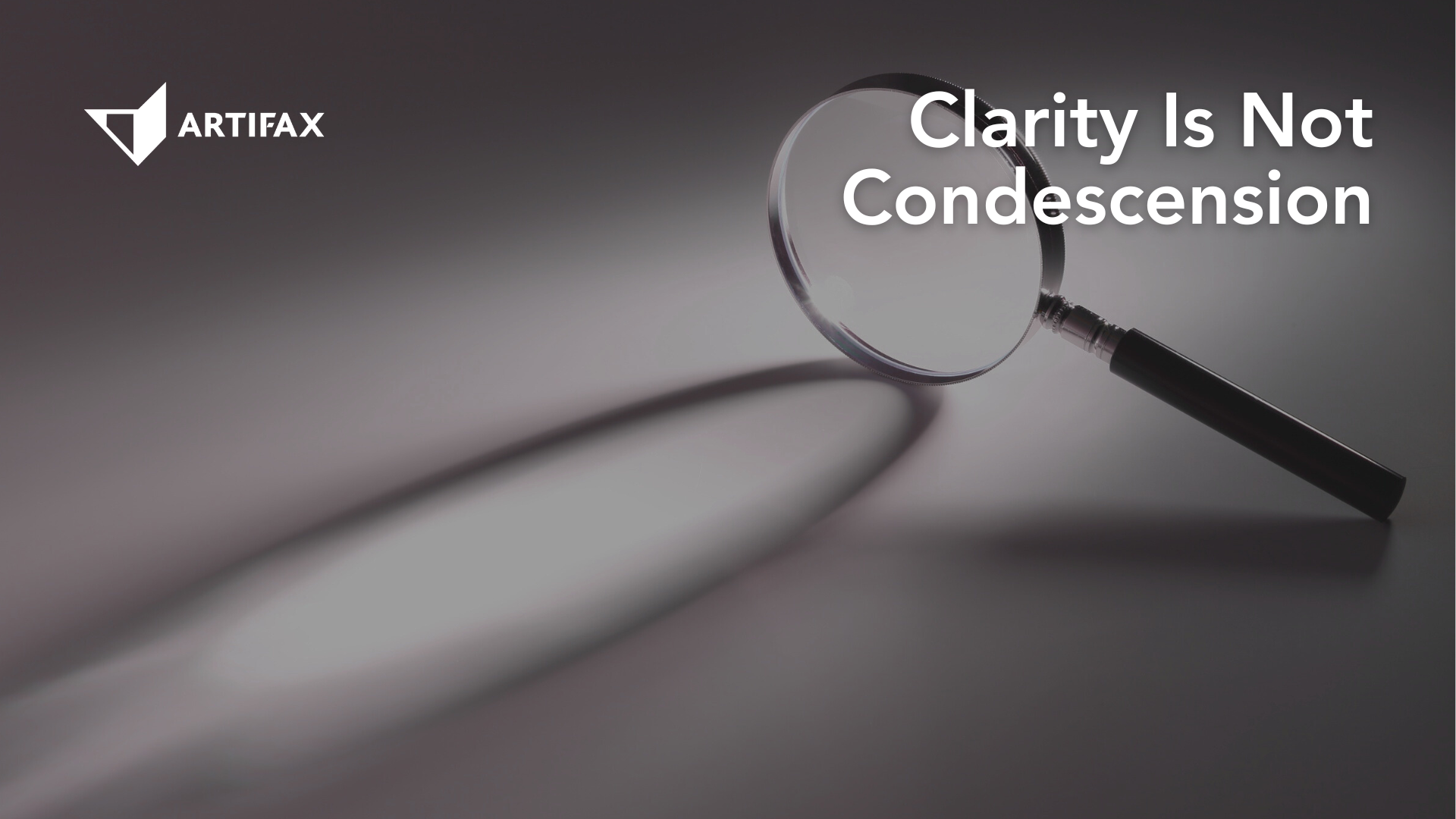
Clarity is not condescension. It’s empowering.
A sentence of context in a programme note, a label, or a pre-show talk can dissolve uncertainty immediately.
Equally, a brief explanation in a meeting, a glossary in shared documentation, or a moment spent unpacking an acronym can transform how safe people feel internally.
Explaining the basics doesn’t lower standards. It raises confidence.
2. Make curiosity safe
Leaders set the tone, in public spaces and private ones.
When you ask questions openly, even about things you feel you “ought” to know, you give others permission to do the same. This applies just as much in boardrooms and production meetings as it does in foyers and workshops.
Psychological safety is built through behaviour, not policy.
3. Invite everyone into the context
Whether you’re talking about Mahler, a strategic priority, a safety protocol, or a new booking workflow, explaining the context helps everyone feel informed rather than left behind.
Audience members understand more deeply. Colleagues make better decisions.
Context builds confidence, everywhere.
What this means for cultural organizations
Assumptions affect every part of how people experience our organizations:
unfamiliar jargon on signage or internal systems,
programme notes written for insiders,
staff who forget that first-time visitors don’t know the building,
meetings that rely on acronyms and historical knowledge,
processes that assume prior experience of how “we do things here.”
These moments may seem small. However, they accumulate.
Over time, they can make cultural organizations feel closed rather than open — even when the stated intention is inclusion.
By removing assumptions and offering clarity, we reduce intimidation. More importantly, we invite visitors, staff, freelancers, and partners into meaningful engagement.
Why this matters to us at Artifax
Across theatres, galleries, museums, festivals, and cultural centers, we see the difference that clear communication makes every day.
Internally, clarity reduces friction, builds confidence, and helps teams collaborate across roles and experience levels.
Externally, it shapes how audiences, clients, and partners experience an organization — whether they feel welcomed into understanding or left to guess.
Assumptions create friction. Clarity creates confidence.
And confidence allows people — audiences and colleagues alike — to engage more deeply with the art, the organization, and the community around them.
Whether the subject is Mahler or meeting minutes, welcoming people into understanding is one of the simplest — and most powerful — forms of inclusion.