
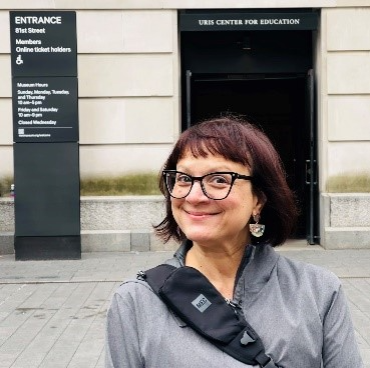
This is me, standing outside the 81st Street entrance to the Metropolitan Museum of Art in New York City.
Why this entrance? At the time, we were working on a project with the Met, and we often heard about the team that manages its group tours. Every day, dozens of students enter through this very door. It may not be the iconic 5th Avenue façade, but it is a vital part of the museum experience for many young visitors.
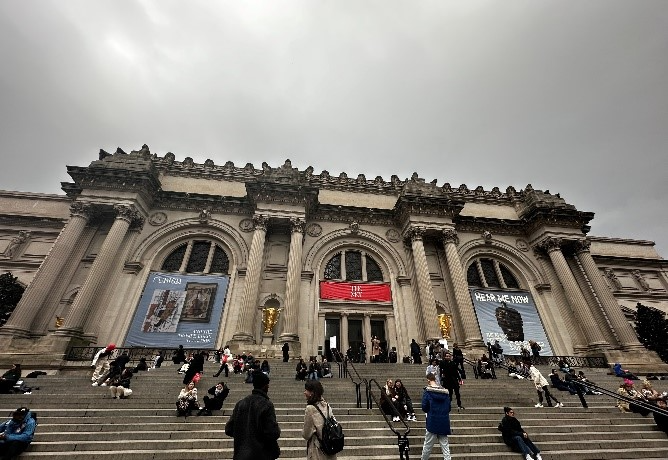
During a work trip to New York, my colleague Adam Pepper and I had the chance to visit the Met in person and meet the teams we had learned so much about. Seeing this “backstage” entrance felt special. Most visitors walk past it without noticing, yet it represents the hidden work that supports a world-class museum.
For me, these behind-the-scenes insights are one of the most rewarding parts of my job.
A moment at the Met
As someone who has worked with museums and galleries for years, I’ve seen just how complex their daily work can be. These organisations handle huge amounts of information — from exhibitions and tours to installations, school visits, workshops, and lectures.
As their activity has expanded, so has the need for information that is consistent, accessible, and shared across teams. One of the most effective ways museums address this is by centralizing information — not as an abstract goal, but as a practical response to real operational complexity.
To explain why this matters so much, I want to start with that moment at the Metropolitan Museum of Art.
How museums differ from performing arts organisations
Although my own background is in the performing arts, I’ve found that museums face a distinct set of challenges when it comes to event and venue management.
Their work spans a wide range of formats, including:
-
exhibitions and installations
-
lectures and talks
-
workshops and educational events
-
film screenings
-
school visits and guided tours
-
performances that sit within broader programming
Museums also often operate across multiple buildings and rely on every available space — from galleries and archives to offices, meeting rooms, and storage. As a result, information can quickly become spread across physical locations, systems, and teams.
The challenge of scattered information
Many museums struggle with information that lives in too many places at once. Paper records may sit in filing cabinets. Digital documents may be saved in personal folders or on shared drives. When teams work in silos, duplicate data entry becomes common.
High staff turnover adds another layer of complexity. When someone leaves, their knowledge often leaves with them. This can lead to inconsistent processes and gaps in institutional memory. More recently, remote and hybrid working has made it even harder to rely on information that exists only on-site.
Together, these challenges point to the need for a single, shared source of truth.
How centralized systems support museum teams
A centralized, web-based event and venue management system allows staff to access accurate information from anywhere. Whether you’re travelling to meet a partner organisation or checking installation times on your commute, the details you need are always available.
Below are some of the most significant benefits museums experience when information is shared in this way.
1. Streamlined operations
Centralizing event information reduces duplication and simplifies everyday tasks. Staff can find, update, and trust information in one place, which reduces errors and saves time.
It also supports clearer communication across departments. With appropriate permissions in place, teams can share updates confidently and work more efficiently together.
2. Improved coordination across teams
When everyone works from the same information, coordination becomes far easier. Schedules, resources, and responsibilities stay aligned because they’re based on consistent, up-to-date data.
Scheduled reports and automated notifications help ensure that the right people are informed when plans change. As a result, collaboration improves across the organisation.
3. Better data, better decisions
Using a shared system encourages consistent data entry, which builds stronger long-term records. Good data, in turn, supports good decision-making.
Museums can track attendance, room usage, income, and resource demand, helping shape future programming and operational strategy. This also strengthens reporting to funders, boards, and other stakeholders.
4. Cost savings through efficiency
Reducing duplication and manual administration frees up time and resources across the organisation. Over time, these efficiencies translate into meaningful cost savings.
Clearer data also supports more accurate budgeting and more strategic use of space, staff, and equipment.
5. Greater accessibility and transparency
A cloud-based system makes information available to the right people at the right time — whether they are staff, volunteers, sponsors, or partners. This improves accountability and helps build trust across teams.
6. Stronger security and data integrity
Centralized platforms like Artifax include security features such as permission controls, encryption, and regular backups. These safeguards help protect sensitive information and support compliance with data protection requirements.
Keeping information in one secure environment significantly reduces the risk of loss or unauthorised access.
A more sustainable way to work
The benefits of shared information extend well beyond efficiency. Museums that rely on a single, reliable platform spend less time searching for information and more time focusing on their mission: preserving and sharing culture with current and future generations.
I’m proud to support museums and galleries around the world. Seeing the hidden work behind institutions like the Met reminds me why thoughtful systems — and the people who use them — matter so much.