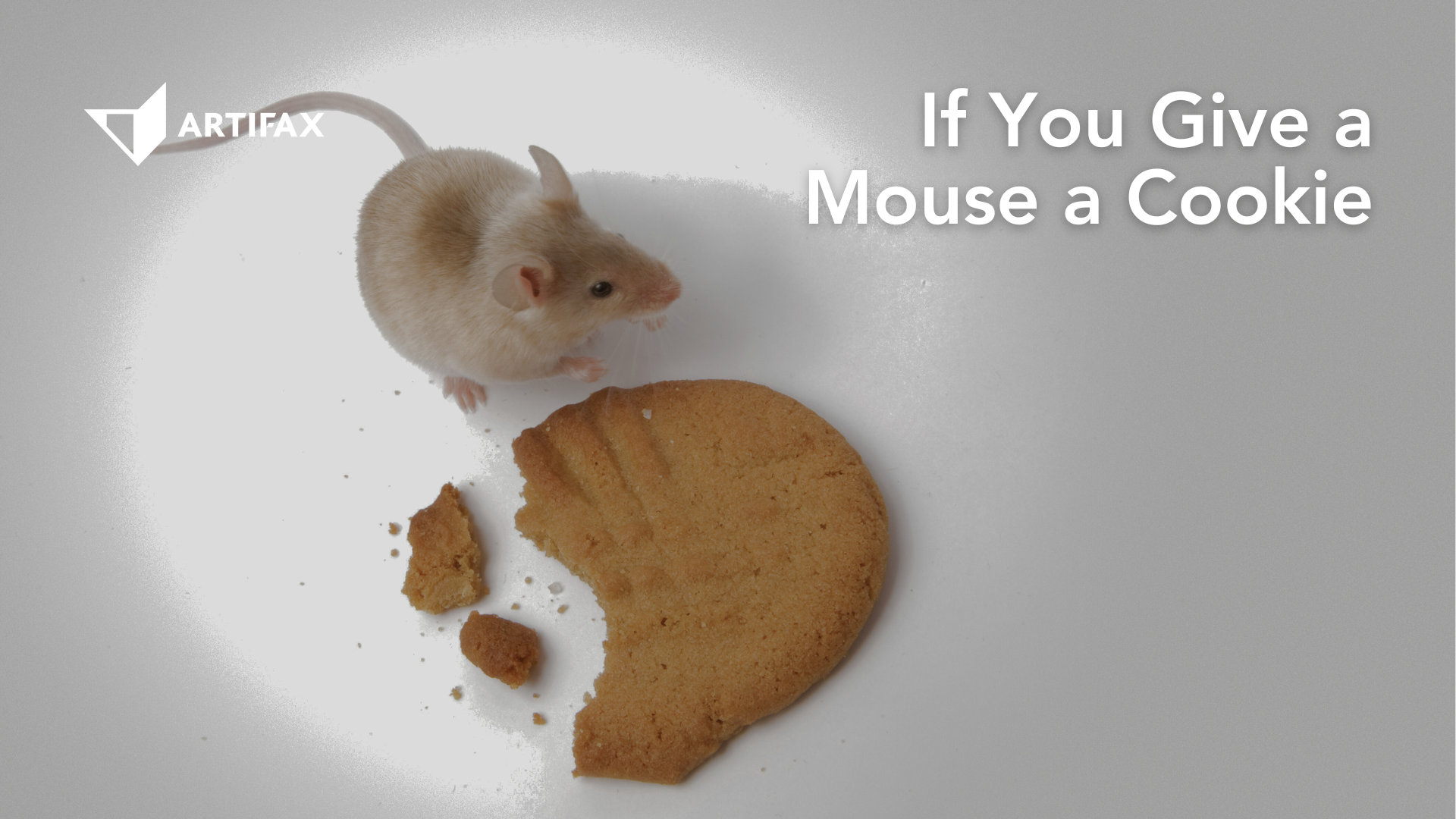
Remember If You Give a Mouse a Cookie? It’s one of my favorite books. Cute mouse, big chain reaction — and yes, I even have a tattoo to memorialize it 🤣
If you’re not familiar with the story, here’s the short version. A mouse asks for a cookie. Then, because he has a cookie, he needs a glass of milk. Then a napkin. Then a mirror. Then a nap. One small request sets off a long chain of perfectly logical follow-ups.
Honestly? It perfectly describes what it’s like for many of our clients working with venue management software.
One improvement leads to another.
It usually starts small. A tweak to a report. A change to a scheduling workflow. A new way of tracking information.
Then that improvement reveals another opportunity… and then another… and before you know it, you’re redesigning an entire workflow.
That’s not a bad thing. In fact, it’s often a sign that your system is working and evolving with you. However, when you’re deep in the day-to-day as a user, it can be hard to see how all of those pieces connect.
Software is a system, not a set of features.
One thing I’m reminded of every day in Client Success is that software doesn’t work in isolation. Every feature, workflow, and process is connected, and each choice has an impact somewhere else.
When you’re focused on solving today’s problem (which makes complete sense) it’s difficult to zoom out and see the full system. You might fix one issue only to create friction elsewhere. Or you might spend time rebuilding something that already exists in another form.
That’s where partnership really matters. 👏🏻
Why guidance makes a difference.
A good Client Success team helps you step back and look at the bigger picture. They help you understand how one change affects the next, and they support you in prioritizing the changes that actually move the needle.
It’s not about doing more work. It’s about doing the right work, in the right order, so you’re not reinventing the wheel every time something shifts in your organization.
With the right guidance, those incremental improvements become intentional progress rather than reactive change.
Making the chain reaction work for you.
Just like the mouse with his cookie, one small action in your system can spark a whole chain reaction. The difference is that, with the right support, that chain reaction can work for you instead of against you.
When changes are thoughtful, connected, and aligned with your goals, they add up to something powerful — not overwhelming.