There’s a quote often attributed to Voltaire (though it’s more accurately traced to the French writer Pierre-Marc-Gaston, duc de Lévis) that goes something like this:
It is easier to judge the mind of someone by their questions rather than their answers.
I think about that idea often in my work.
Answers are everywhere. Experience, data, best practice, and technology give us no shortage of them. However, answers are only useful if you’re asking the right questions first.
And that’s where skill really shows up.
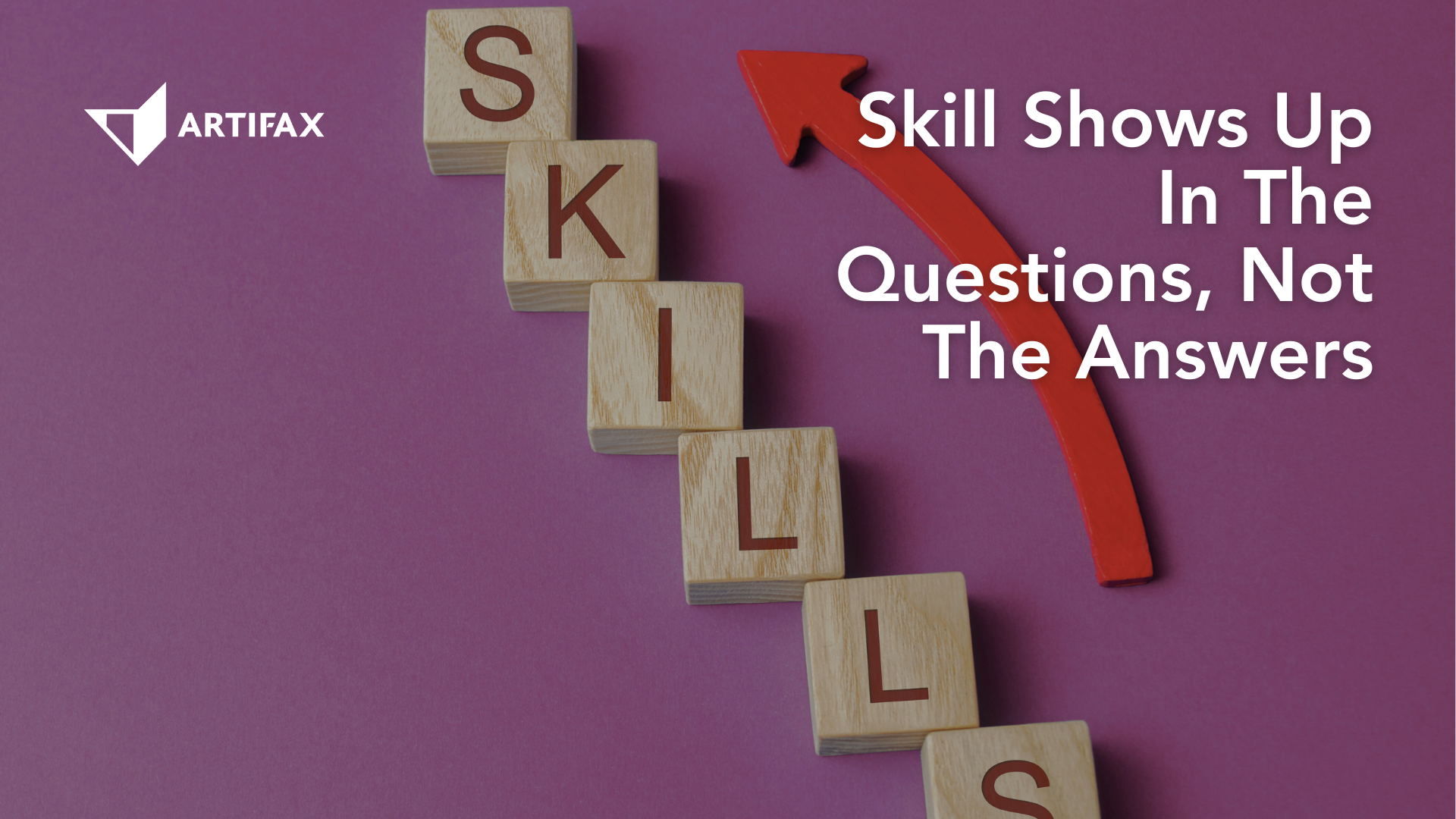
Knowledge produces answers. Skill shapes the questions.
In complex organizations, particularly in arts and culture, it’s tempting to jump straight to solutions. There’s pressure to be decisive, to move quickly, and to show progress.
Yet premature answers often solve the wrong problem.
Good questions do something different. They slow the conversation down just enough to create clarity. They help surface context, assumptions, and constraints that aren’t always visible at first glance. Importantly, they shape what kind of answer will actually be useful.
In practice, that means asking things like:
What problem are we really trying to solve here?
Who else is affected by this process, and how?
What would success look like six months from now, not just today?
What information would help us decide with confidence?
None of these questions provides an answer on its own. However, together they define the problem in a way that makes good answers possible.
The most effective work starts with shared understanding.
When people talk about “good consulting,” they often focus on expertise: deep knowledge, proven frameworks, and confident recommendations.
Those things matter. But they come after something more fundamental.
The most effective work doesn’t start with answers at all. It starts with shared understanding.
That means taking the time to understand an organization’s history, culture, constraints, and ambitions. It means recognizing that two venues can look similar on the surface while operating in very different ways underneath. And it means resisting the urge to apply a familiar solution before the problem has been properly framed.
In other words, progress depends less on having the right answer ready, and more on asking the questions that align everyone around what actually matters.
Questions reveal priorities, not just problems.
One of the overlooked benefits of good questions is that they do more than identify issues. They reveal priorities.
Asking why something exists, who it serves, or what would happen if it didn’t, often exposes steps that persist out of habit rather than value. It helps teams see where effort no longer delivers the impact it once did. And it creates space to make trade-offs consciously, rather than by default.
In many cases, the insight is already there. The organization knows more than it realizes. What’s needed is the skill to draw that insight out, connect it, and turn it into clear decisions.
Capability grows when people learn how to ask well.
There’s an important difference between solving a problem for someone and helping them understand how to approach the problem themselves.
Providing answers can bring short-term relief. However, it doesn’t always leave an organization better equipped for what comes next.
Asking better questions builds something more durable. It helps teams develop the confidence to evaluate options, challenge assumptions, and adapt as conditions change. Over time, that capability becomes more valuable than any single solution.
This is especially important in arts and cultural organizations, where resources are limited, priorities compete, and decisions often carry creative, financial, and social weight.
In that context, the ability to pause, reflect, and ask the right questions isn’t a luxury. It’s a leadership skill.
Answers still matter, but only in the right order.
None of this is an argument against answers, expertise, or systems. They’re essential.
But sequence matters.
When questions come first, answers land in the right place. Decisions are clearer. Systems support real needs rather than assumptions. And progress feels grounded rather than forced.
That’s why skill shows up in the questions, not the answers. Because answers are only helpful when they’re responding to the right problem. Defining that problem well is where the real work begins.