
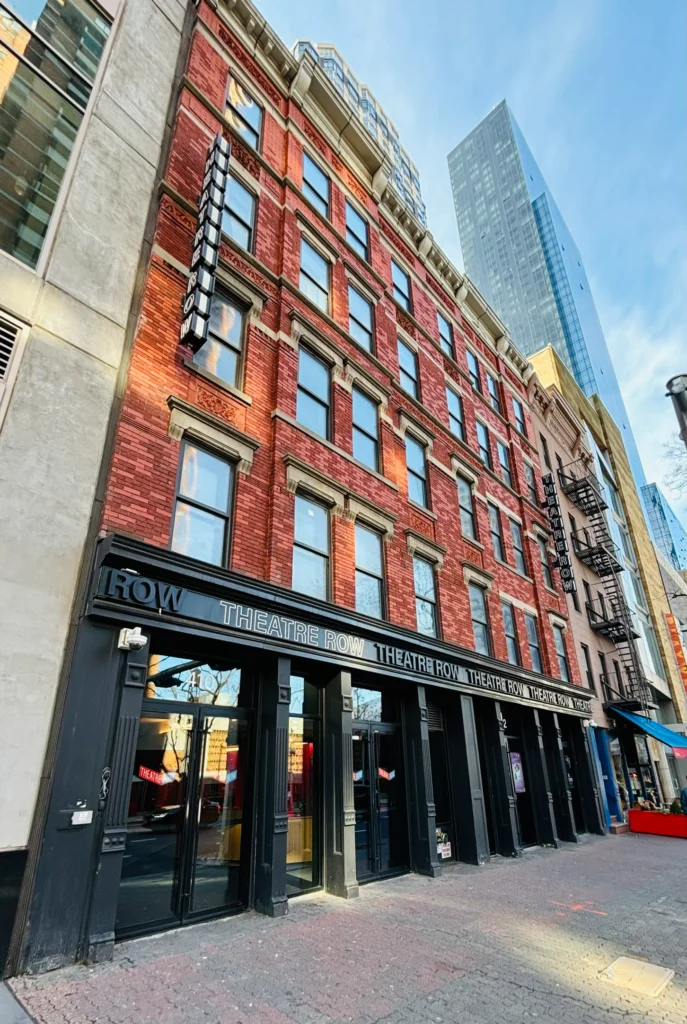
While in New York for APAP NYC, I stopped by Theatre Row to catch up with the team at Building for the Arts NY. Their drive for continuous improvement — not just in outcomes, but in how their work actually gets done — was energizing and inspiring.
It reminded me of a line from James Clear that I return to often:
“We don’t rise to the level of our goals. We fall to the level of our systems.”
It’s a deceptively simple idea, but a powerful one.
Goals are easy. Systems do the work.
Most organizations are very good at setting goals. We articulate ambitions, targets, and intentions with clarity and optimism.
What’s harder and far more consequential is building the systems that make those goals achievable.
Because when pressure mounts, it’s not our aspirations that carry us through. It’s our day-to-day processes, habits, tools, and decision-making frameworks.
When systems are weak, even the best goals struggle to gain
What we mean by “systems”
Systems don’t have to be complex or technical. They’re simply the structures that support how work happens:
- how information is captured and shared,
- how decisions are made and revisited,
- how responsibilities are defined,
- how handovers work between teams,
- how exceptions are handled,
- how success is measured and understood.
Often, systems evolve informally over time, shaped by urgency, habit, or workarounds that once made sense but no longer do.
That’s when friction creeps in.
When systems lag behind ambition
In organizations with ambitious goals but underdeveloped systems, certain patterns tend to emerge:
- heroic individual effort becomes the norm,
- knowledge lives in people’s heads rather than shared processes,
- inconsistencies appear across teams,
- problems are fixed repeatedly rather than resolved permanently,
- and progress feels harder than it should.
None of this reflects a lack of talent or commitment.
It’s usually a sign that systems haven’t kept pace with ambition.
The quiet power of continuous improvement
What impressed me about the Theatre Row team wasn’t a dramatic transformation or sweeping reform. It was their commitment to asking:
- Is this still serving us?
- Where does this process create friction?
- What could be simpler, clearer, or more resilient?
That mindset of continuous, thoughtful refinement is what allows organizations to adapt without burning out their people.
Small system improvements compound over time.
Why this matters in arts and culture
Arts organizations operate in environments defined by complexity: multiple stakeholders, evolving programs, tight resources, and high expectations.
In that context, strong systems aren’t bureaucracy, they’re enablers. They:
- reduce cognitive load,
- support consistency,
- protect quality,
- and free people up to focus on creative and mission-driven work.
When systems work well, teams spend less time firefighting and more time creating value
A useful question to keep asking
Instead of only asking “What are we trying to achieve?”, it’s often more productive to ask:
“What needs to be in place for this to work reliably?”
That shift from outcomes to infrastructure changes the conversation.
It moves focus away from individual effort and toward shared responsibility.
It replaces frustration with clarity.
And it turns ambition into something sustainable.
Because in the end, it’s not our goals that determine what we achieve.
It’s the systems we rely on when things get busy, complicated, or unexpected